For years, the conversation around UK SMEs has centred on growth. How businesses can expand, innovate, invest and scale.
But what happens when businesses can no longer see far enough ahead to plan for growth?
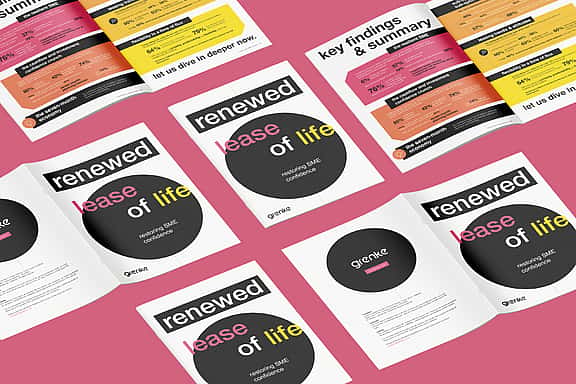
That is one of the most striking findings from Renewed Lease of Life 2026, grenke UK's latest research into the realities facing small and medium-sized enterprises. The report found that UK SMEs are now operating within an average seven-month planning horizon, with just 14% able to confidently see beyond the next 12 months.
It is a finding that tells us a great deal about the current mindset of the SME community.
When uncertainty becomes the operating environment
Business leaders have always faced uncertainty. Economic cycles, changing customer demand and market disruption are part of running a business.
What feels different today is the sheer volume of pressures arriving at once.
Rising energy costs, fluctuating demand, cashflow pressures, regulatory complexity, technological change and the growing influence of AI are all competing for attention. For many businesses, the challenge is no longer identifying opportunities. It is managing risk.
Our research found that 74% of SME decision-makers believe making the wrong long-term investment decision feels riskier than it did two years ago.
In that environment, caution becomes understandable.
The shrinking confidence horizon
The seven-month economy is not simply about planning cycles. It is about confidence.
The shorter a business's planning horizon becomes, the harder it becomes to make strategic decisions. Investments are delayed. Recruitment plans are paused. Equipment upgrades are pushed further down the priority list.
Over time, the focus shifts from growth to preservation.
Businesses become increasingly concerned with protecting stability today rather than building capacity for tomorrow.
This is not because SMEs have lost ambition. Far from it.
Throughout the research, business leaders consistently recognised the need to modernise, improve productivity and remain competitive. The challenge is that many no longer feel they have the visibility or certainty required to act confidently.
The hidden cost of short-term thinking
While caution may feel sensible in uncertain times, there are risks associated with standing still.
The same report found that nearly half of SME equipment is now considered sub-optimal, contributing to higher running costs, lower productivity and reduced employee engagement.
At the same time, 57% of businesses report feeling pressure to modernise.
This creates a difficult balancing act. Businesses know they need to invest, but many feel unable to commit.
The result is what we might describe as modernisation paralysis – where the intention to move forward exists, but confidence to take the next step does not.
Restoring confidence
If there is one message that emerges from the Seven-Month Economy, it is that confidence has become one of the most important business resources of all.
The challenge facing SMEs today is not recognising the need to invest and adapt. It is feeling able to do so.
That means creating conditions that reduce risk, improve visibility and give businesses greater confidence in their decision-making. Whether through access to finance, predictable costs, greater flexibility or stronger economic certainty, the businesses that can regain confidence are likely to be the businesses best positioned to thrive.
The defining story of UK SMEs in 2026 is no longer growth. It is resilience.
The challenge now is ensuring resilience becomes a platform for future progress, rather than a permanent state of survival.