For many years, leasing has been viewed as an alternative way to finance equipment.
Today, it has become something more.
It is increasingly recognised as a practical way for businesses to preserve cashflow, spread costs and remain technologically competitive.
So why are relatively few SMEs choosing it?
This is one of the most intriguing findings from Renewed Lease of Life 2026.
Businesses understand the benefits
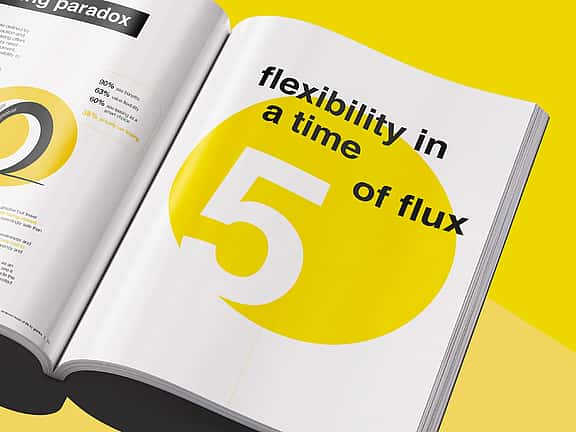
Our research found that 90% of SMEs recognise at least one benefit of leasing.
Business leaders consistently highlighted:
- predictable monthly costs
- preserving cashflow
- flexibility
- access to newer equipment
The understanding is there.
The value is recognised.
Yet only 38% currently lease any of their equipment.
That gap between awareness and adoption is what we call The Leasing Paradox.
Why the gap exists
The answer isn't that businesses dislike leasing. In fact, attitudes towards leasing have strengthened over the past two years.
Instead, many SMEs continue to default towards traditional funding methods or simply delay investment altogether.
Why?
Because confidence has become part of every financial decision. Businesses aren't just asking:
"Should we lease?"
They're asking:
"Is now the right time to invest at all?"
That changes the conversation completely.
Investment decisions are changing
Today's SME leaders are balancing multiple priorities simultaneously.
- Managing cashflow.
- Navigating rising costs.
- Responding to customer expectations.
- Keeping pace with technology.
- Protecting profitability.
Against that backdrop, every investment feels more significant.
The challenge isn't simply choosing a finance solution. It's deciding whether to invest in the first place.
A changing role for leasing
Perhaps this means we need to think differently about leasing. Historically, leasing has often been positioned as an alternative to buying.
Today's environment suggests it should increasingly be viewed as a way of reducing the barriers to investment.
- Greater flexibility.
- Predictable costs.
- The ability to modernise without large upfront expenditure.
These are no longer simply financial features.
They are confidence builders.
Looking ahead
The report suggests UK SMEs are entering a period where confidence will shape investment as much as affordability.
Businesses know they need to modernise.
They recognise the value of leasing.
The challenge now is closing the gap between intention and action.
Because the businesses that continue to invest thoughtfully today are likely to be the ones best prepared for tomorrow.